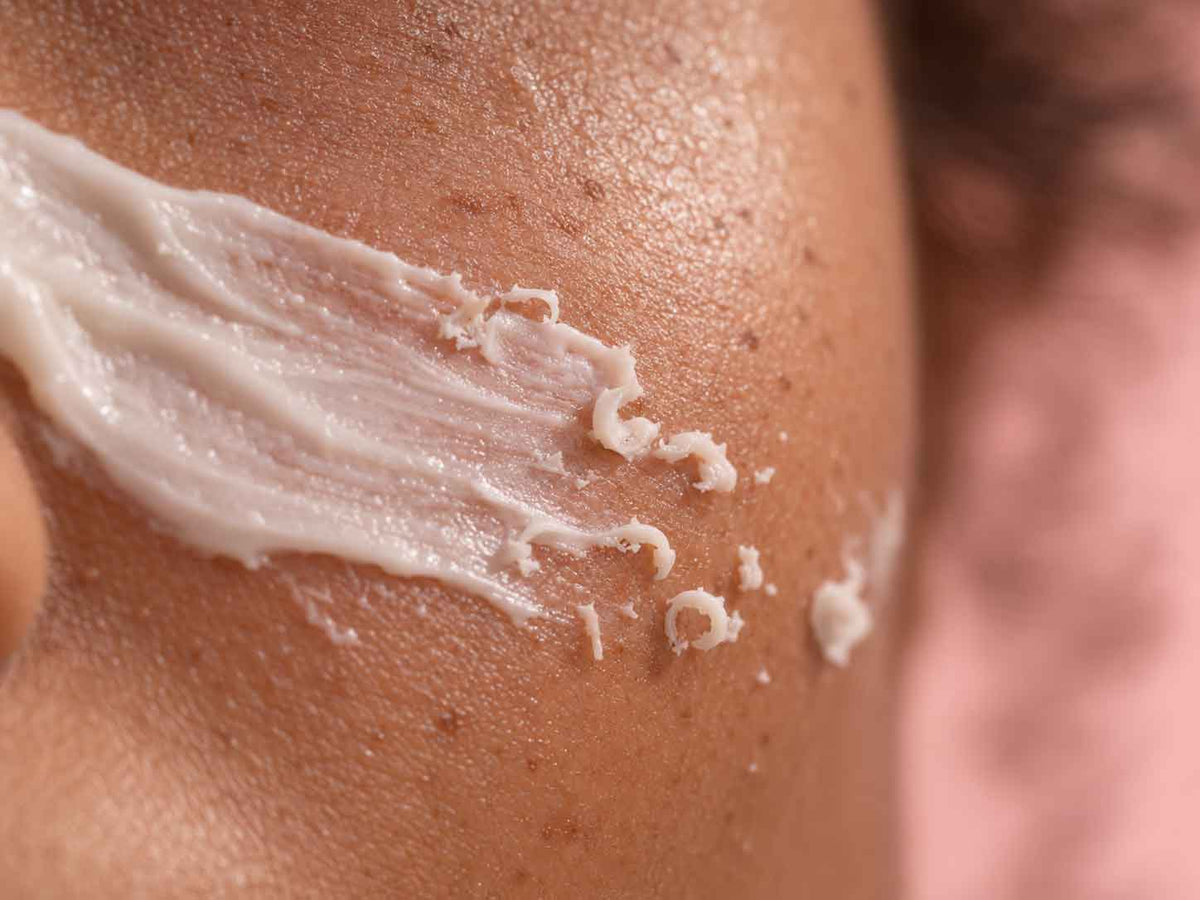



Exfoliating your face should never leave your skin feeling raw or stripped. The aim is to gently lift away some of the dead skin cells on the surface, helping to refine its texture and leaving it ready for the rest of your skincare routine.
What does facial exfoliation actually do?
Your skin naturally renews itself, but dead cells can linger on the surface. The right exfoliant may leave your complexion looking smoother and more even, with a softer feel. The key is to find an approach that suits your skin rather than exfoliating more often than necessary.
Physical scrubs vs chemical exfoliants: what's the difference?
A physical scrub uses fine particles or a textured formula to exfoliate as you massage it over the skin. If your skin tolerates this method, choose a gentle texture and use a light touch—there's no need to scrub.
Chemical exfoliants use ingredients such as AHAs, BHAs and PHAs to exfoliate without friction. Different formulas address different concerns, and their strengths can vary considerably. Always follow the product directions and avoid layering multiple exfoliating treatments in one routine.
How to choose a facial exfoliant for your skin type
Sensitive skin
Keep exfoliation especially gentle and allow plenty of time between applications. PHAs and certain enzyme-based formulas may feel more comfortable than grainy scrubs, although every skin reacts differently.
Dry skin
Look for a mild formula with moisturising ingredients. Avoid prolonged rubbing and follow with a moisturiser to keep your skin comfortable.
Combination or oily skin
Moderate exfoliation can help skin look smoother by reducing the build-up of surface cells. A BHA-based product may be worth considering if your pores are prone to congestion, provided your skin tolerates it.
Normal skin
Both a gentle physical scrub and a mild chemical exfoliant can work. Choose according to your preferences and, above all, how comfortably your skin responds.
How often should you exfoliate your face?
There is no single schedule that suits everyone. If you're new to exfoliation, once a week is a cautious starting point. Some formulas are designed for more frequent use, while others require longer intervals. Follow the label and scale back if you notice tightness, redness or discomfort.
How to exfoliate your face, step by step
- Start with a gentle facial cleanser.
- Apply your exfoliant exactly as directed on the packaging.
- If using a scrub with particles, massage lightly without pressure.
- Rinse if instructed, then gently pat your skin dry.
- Finish with a moisturiser suited to your skin.
When using exfoliating acids, remember to wear appropriate sun protection during the day.
Are DIY face scrubs worth trying?
Homemade recipes may be tempting, but it's difficult to control their strength. Lemon, baking soda and coarse grains can be too harsh for delicate facial skin. A purpose-made facial exfoliant generally offers a more predictable texture, pH and ingredient concentration.
Should you exfoliate before applying a face mask?
Not as a rule. Combining exfoliation with a purifying mask on the same day may be too much for some skin types. If yours is sensitive or reactive, give your skin a break between the two steps.
For more inspiration, explore our facial skincare collection and our guide to choosing the right face mask.