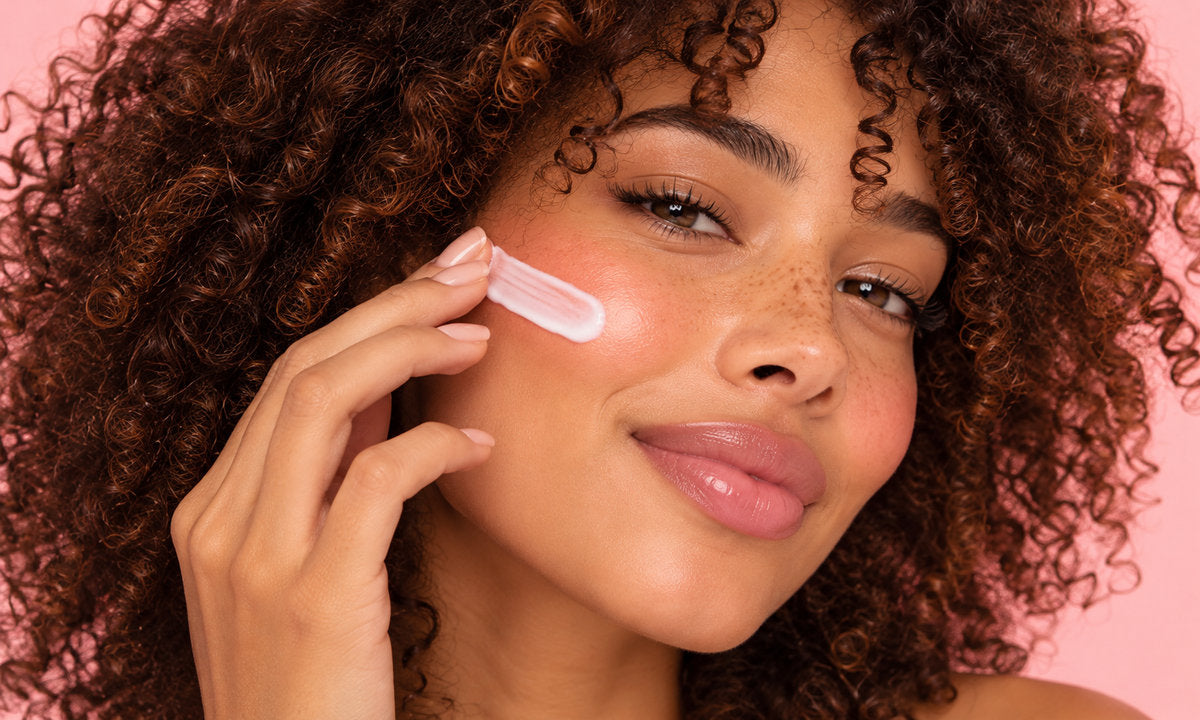


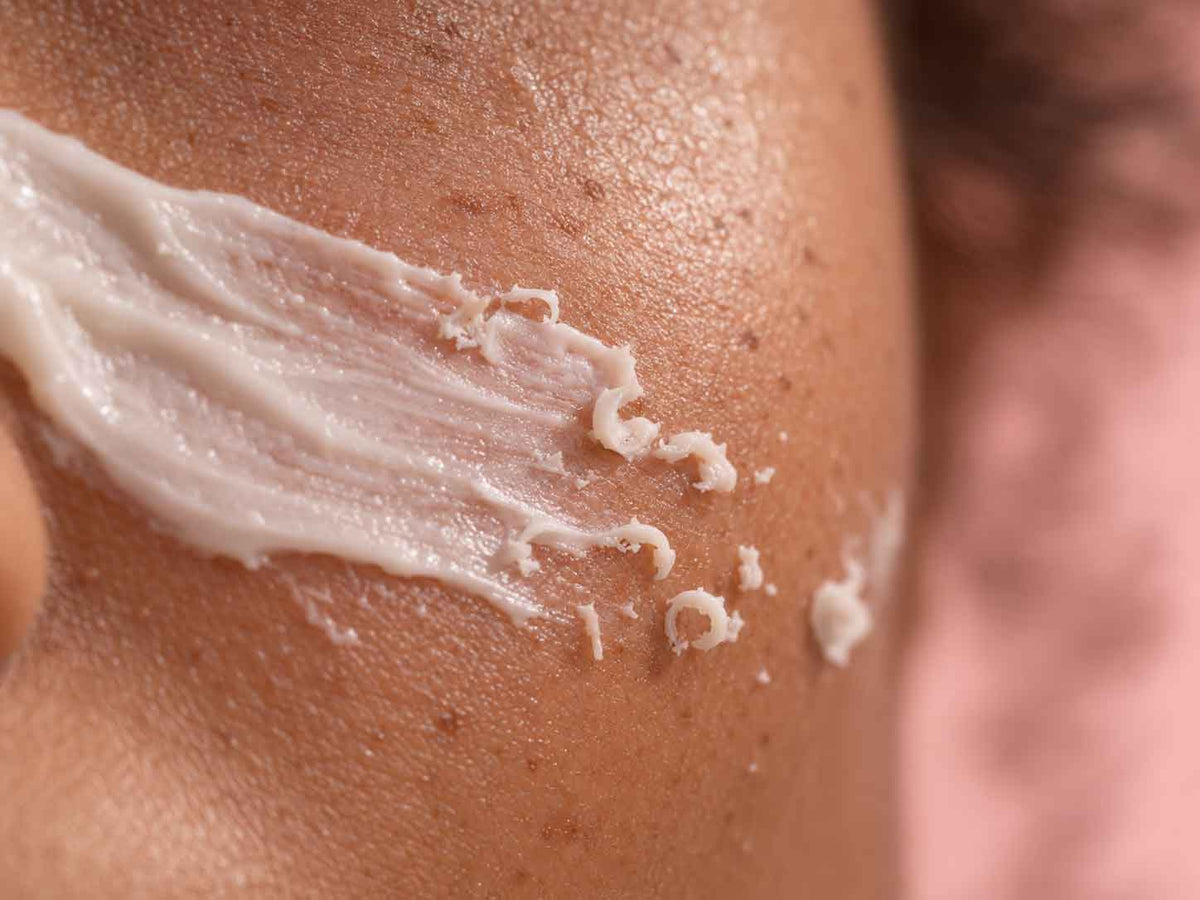
You've just applied your serum, followed by your moisturiser. Everything looks fine, until little flakes start rolling up under your fingers. Your foundation catches, your sunscreen starts to pill, and you wonder whether your skin is rejecting your skincare. This phenomenon has a name: cosmetic pilling.
The good news is that it doesn't automatically mean your product is poor quality or that something is wrong with your skin. Texture, the amount you apply and the way you layer formulas all play a part. Here's how to tell pilling skincare apart from peeling skin, identify the step causing the problem and build a simpler routine without giving up useful products.
What is pilling, and what are those little flakes on your face?
Pilling happens when product residue gathers into tiny rolls or visible particles on the skin's surface. They may be white, translucent or slightly coloured if you're already wearing makeup. You often notice them when rubbing in a cream, going over the same area again or adding another skincare layer.
These particles are generally made up of ingredients from the formulas you've applied, which clump together with friction. Some textures create a film on the surface; if that film moves before it has settled, it can break apart. This doesn't mean the products are necessarily poor quality: two formulas that work beautifully on their own may not layer well together.
Researchers have examined this phenomenon, including in a 2024 study published in Skin Research and Technology. They observed that product combinations, sunscreen application and rubbing motions could influence pilling. The study reports findings in a particular group; it cannot predict how every skin type or formula will behave.
Why does a moisturiser or serum start to pill?
First possibility: the amount. Applying too much leaves more material on the skin's surface. If you then add a moisturiser, makeup primer or SPF, rubbing can shift that excess. With a serum, start with the quantity recommended in its instructions rather than adding several doses in the hope of getting more hydration.
Second possibility: too many layers. A gel, serum, rich cream, primer and sunscreen aren't necessarily incompatible, but each step introduces another texture. Some combinations of polymers, emollients and film-forming agents don't layer as smoothly as others. There's no universal list of ingredients to avoid: the full formulation and how you use it matter more than a single name on the label.
Third possibility: application technique. Going over the same area repeatedly, rubbing vigorously or immediately applying another layer can make the previous film roll up. Clean skin, gentle movements and a reasonable pause between steps may be enough to noticeably improve the finish.
The condition of your skin's surface can also matter. Dry skin or uneven texture may affect how products spread. But remember: pilling doesn't prove that your skin is dehydrated or needs exfoliating.
Pilling skincare or peeling skin: how can you tell the difference?
The key clue is often when it happens. If little rolls only appear after you've applied two products and rubbed gently, cosmetic pilling is a plausible explanation. If flakes are already visible on bare skin after cleansing, dryness, irritation or another skin concern may be involved instead.
To investigate, look at your face after gentle cleansing and before applying anything. Then test just one formula, following its directions, on a small area. The next day, gradually reintroduce another step. This simple approach can help you identify a combination that pills without blaming a particular ingredient too quickly.
If you experience burning, persistent itching, marked redness or unusual flaking, don't treat it as a simple texture issue. Stop using the suspected product and seek advice from a healthcare professional if symptoms persist.
Six ways to prevent pilling without changing your entire routine
Start with a clean base. In the morning, adapt cleansing to your skin's needs without overusing harsh products. Residue left on your face from the previous day can make new textures harder to apply evenly.
Use the right amount. More product doesn't necessarily mean better results. Follow the manufacturer's recommendations, spread the formula evenly and avoid repeatedly working over the same areas.
Apply lighter textures before richer ones when the instructions allow. A water-based serum usually goes on before a cream. However, the exact order depends on the products: if a brand provides specific directions, follow those first.
Let each layer settle. You don't need a universal timer: simply wait until the texture no longer moves around or feels sticky before moving on. If your skin still feels heavily coated, try using less product first.
Be gentle. Smooth the product on, then press lightly rather than massaging for a long time. This is especially helpful when you're applying something over a layer that has already formed.
Remove one step as a test. For a few days, stick to the products you actually need. If pilling disappears, reintroduce products one by one. You'll find the troublesome combination more easily without throwing away your entire skincare collection.
What if your sunscreen is the product that pills?
Sunscreen is often the last step in your morning routine, so it comes into contact with everything you've already applied. Research on pilling has found that adding sunscreen can encourage small clumps to form with certain product combinations. That doesn't mean you should skip SPF or apply less of it.
Instead, keep using the recommended amount of sunscreen and follow the reapplication instructions on your product. To reduce friction, simplify the steps underneath: an appropriately measured serum, a moisturiser if needed, then sunscreen once the previous layers have had time to settle. Avoid vigorous rubbing once the sunscreen film is in place.
If the same combination always pills, try a different moisturiser or sunscreen texture while maintaining suitable sun protection. A comfortable routine is also one you're more likely to follow every day.
What skincare routine gives a smoother finish?
There's no need to find ten products that are supposedly compatible on paper. Start by identifying what your skin needs: gentle cleansing, suitable hydration and daytime sun protection. Targeted treatments can come later, when they address a specific concern. This is also the idea behind our guide to a minimalist skincare routine, which helps you separate the essentials from the extras.
If you like water-based textures, V10 Plus Hyaluronic Acid Serum is one example of a lightweight hydrating product available at Browlab. Its product instructions say to apply it before moisturiser and finish with sunscreen during the day. This isn't an anti-pilling promise: even a fluid serum can pill depending on the products layered over it and the amount used.
If you prefer a more enveloping texture, Salt & Stone Squalane Face Cream is part of our selection. Again, choose it for its intended use and texture, not because it would be universally compatible with every serum and SPF. You can compare other options in Browlab's facial skincare collection.
And if you're unsure about the order of application, our guide to layering skincare in the right order offers more guidance. The aim isn't to do more, but to apply each product under the right conditions.
When should you change products rather than your technique?
You've reduced the amounts, left time between layers and tested each product separately, but a cream still rolls up as soon as it touches your skin? Its texture may simply not suit you, or it may not work well with your usual sunscreen. In that case, changing one formula is more useful than adding more exfoliation or extra steps.
Don't confuse skin discomfort with an imperfect finish, either. A product that pills without causing redness may present an application issue; one that causes irritation or a burning sensation needs more caution. Pay attention to your skin's reactions, follow the instructions and don't persist with a formula your skin doesn't tolerate.
Remember: if your moisturiser pills, check the amount, number of layers and rubbing first. Adjust one variable at a time. You'll keep a coherent routine that's easier to follow and more pleasant day to day, without blaming your skin for what may simply be a layering problem.