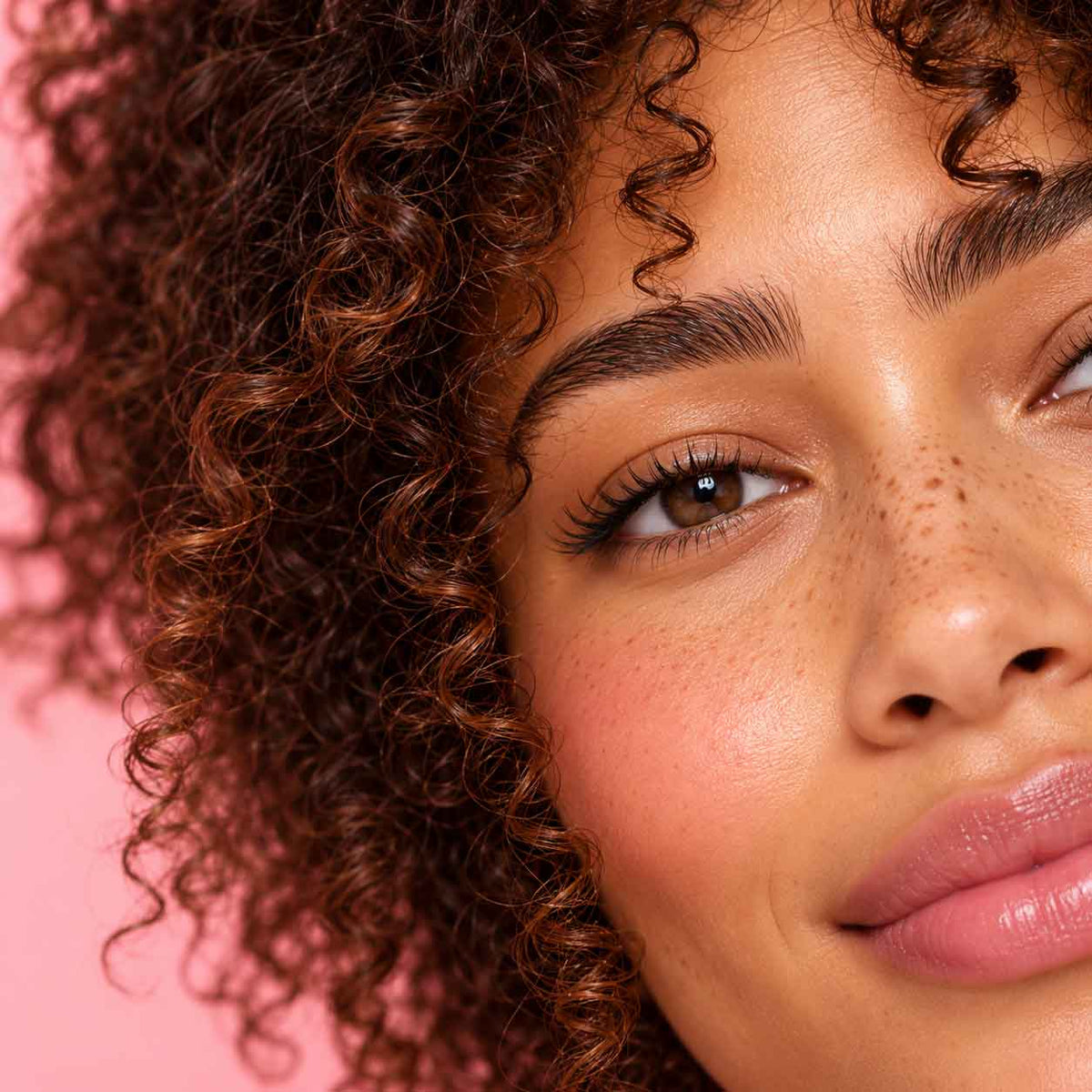
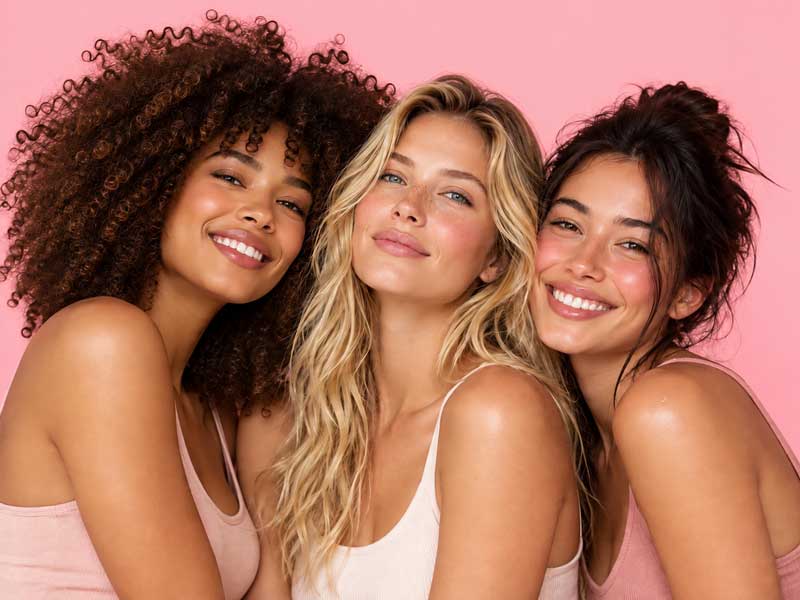

“Hair type” can refer to several different things: strand diameter, hair pattern, density, porosity or scalp condition. Two people with curly hair can therefore have very different needs. It is more useful to identify several characteristics than to rely on one label.
1. Fine, medium or coarse hair: strand diameter
Diameter describes the thickness of an individual hair. Fine strands are smaller and can be weighed down easily by rich textures. Coarser strands often tolerate more product, but that does not automatically mean they are dry or difficult to style.
If your hair is fine
- choose lightweight textures;
- keep richer care mainly on the lengths;
- rinse thoroughly to avoid a flat finish;
- build volume during drying rather than layering products.
For a targeted routine, read our guide to fine hair and volume.
2. Straight, wavy, curly or coily: hair pattern
Your natural pattern affects how sebum travels down the hair and how the fibre responds to styling. Wavy, curly and coily lengths may benefit from extra softness and slip, but product amount should still be adjusted to strand diameter and density.
Straight hair
It can look oily more quickly because sebum travels easily from roots to lengths. That does not mean it needs a fixed washing schedule: adapt washing to your scalp.
Wavy hair
Waves can lose definition when products are too heavy. Start with small amounts and adjust according to the result.
Curly or coily hair
Lengths often benefit from care that improves softness and detangling slip. A wide-tooth comb or fingers may be more comfortable than aggressive dry brushing, depending on your texture.
3. Oily, dry or sensitive scalp
The scalp and lengths should be assessed separately. You can have oily roots and dry ends, or a sensitive scalp with coarse hair. Choose shampoo according to the scalp and conditioning care according to the lengths.
Our guide on how to choose a shampoo explains this approach.
4. Porosity: useful, but not a diagnosis
Porosity describes how easily the fibre absorbs and loses water. Hair heavily affected by bleaching, heat or chemical treatments can become more porous. Home tests such as the “hair in a glass of water” test are unreliable: observe instead how your hair behaves during washing, drying and conditioning.
5. Density: how much hair do you actually have?
Density refers to how many hairs are present on the scalp. It is not the same as strand diameter: you can have many fine hairs or fewer coarse hairs. A progressive decrease in density is different from simply having fine strands.
If you notice a true decrease in density or unusual shedding, read our guide to hair loss.
6. How to build a routine for your hair type
- Choose shampoo according to your scalp.
- Adapt conditioner or mask to the condition of your lengths.
- Adjust product amount to strand diameter and density.
- Observe the result: heavy roots, dry lengths, lack of definition or breakage.
- Change one step at a time so you know what actually works.
What about plant oils?
They can add softness, shine and cosmetic protection, but not every texture suits every hair type. Read our guide to plant oils for hair.
Browse our full hair-care selection.